




 필자닷컴 야간상담 오픈
 13년연속 소비자만족 1위

 내게 맞는 어학원 찾기
 리얼 학교 방문기
 주말에 내가 쓸 비용은?
 최고가성비 이벤트 즐기기
 현지에서도 필자닷컴!
 현지에서 가능한









 필자 특급 혜택! 컨시어지 서비스







-
순위제목조회수
-
 모알 보알 밴 렌트하기~ 리조트 예약까지
 89,623
 -
 [필리핀 세부] 카모테스 여행 100배 즐기기 49,838
 -
 마닐라 시내 - 리잘 공원정보. (사진 16장 포함) 30,854
 -
 세부의 지역정보15,564
 -
 마닐라 근교 - 따가이따이 여행 정보14,412
 -
 [필리핀 세부/막탄] 호텔 숙박 요금 및 정보13,365
 -
 보라카이의 모든 모습을 볼수 있는 사진첩.13,178
 -
 마닐라 근교 - 팍상한 폭포 여행정보12,878
 -
 [세부-배선착장] 선박회사 전화번호에요~12,503
 -
 마닐라 지역(에르미타 -말라테)의 지도/한국 음식점/쇼핑몰12,154


- 이름 : tutors
- 작성일 : 2012-06-05
- 조회수 : 4676
- 추천수 : 0
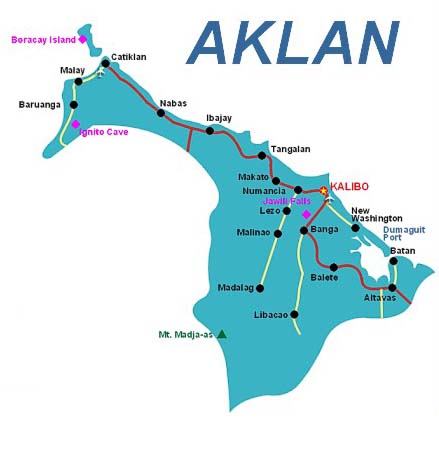
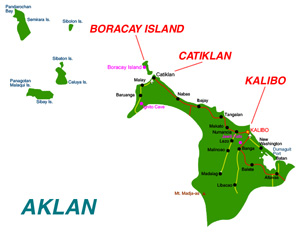
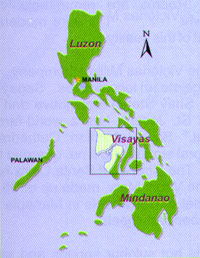
Aklan
Aklan is a province of the Philippines in the Western Visayas. Its capital is Kalibo. It is in the northwest portion of Panay Island, bordering Antique Province to the southwest, and Capiz Province to the east. Aklan faces the Sibuyan Sea and Romblon Province to the north.
History
Aklan is considered to be the oldest province in the country and is believed to have been established in the 12th century by settlers from Borneo ruled by the chieftain Datu Dinagandan which traded with its neighbouring islands.
Towards the end of the 14th century, Datu Dinagandan moved the capital from what is now Batan. In 1433, Datu Kalantiaw's grandson and successor, Datu Kalantiaw III, was said to have formulated a set of laws known today as the Code of Kalantiaw. Well respected scholarly long-term Philippine resident historian William Henry Scott, proved these "laws" to be a total fabrication.[1][2][3][4] In 1437, the short-lived dynasty of Datu Kalantiaw ended when Datu Kalantiaw III was killed in battle with the tribes of Datu Manduyog, the legitimate successor of Datu Dinagandan. When Datu Manduyog became the new chieftain, he moved the capital to Bakan (now known as Banga).
Several datus succeeded Datu Manduyog until the Spanish explorer Miguel López de Legazpi landed in Batan in 1565 and claimed the island for Spain. Datu Kabanyag was the chieftain at that period and had his capital in Libacao.
In 1942, the Japanese invaded Aklan during World War II and in 1945, combined Filipino and American army along with Aklanon guerrillas liberated Aklan during the war in the Pacific.
Aklan finally became a separate province through Republic Act No. 1414 signed by President Magsaysay on April 25, 1956, separating Aklan from Capiz.[5] The original towns were Altavas, Balete, Batan, Banga, Buruanga, Ibajay, Kalibo, Lezo, Libacao, Madalag, Malay, Makato, Malinao, Nabas, New Washington, Numancia, and Tangalan, then all part of the province of Capiz.
This law was authored by Congressman Godofredo P. Ramos and the province was inaugurated on November 8, 1956. Ramos became the first congressman of Aklan, he was succeeded by José B. Legaspi. The third congressman, serving until the declaration of martial law in 1972, was Rafael B. Legaspi. José Raz Menez was appointed the first governor of Aklan by President Magsaysay and he served until December 30, 1959. In 1960, Godofredo P. Ramos became the first elected governor but upon resigning to run for Congress he was succeeded by the vice governor, Virgilio S. Patricio. In 1964, José B. Legaspi succeeded Patricio and he held office for two consecutive terms from 1964 to 1971.
Ethnic groups
The main inhabitants of the province are the Aklanon, who are part of the Visayan ethnic group. Other inhabitants include the Negrito, locally known as the Ati and the Sulod, a lesser known tribal group living in the hinterlands of Panay. Other Visayans are also present such as the Karay-a, the Hiligaynon and the Capiznon.
Languages
The most prominent languages in the province are Akeanon (Aklanon Proper), Malaynon and Buruanganon. Akeanon is spoken by a majority of the people, while Malaynon is spoken in Malay and Buruanganon is spoken in Buruanga, Aklan . Other regional languages used include;
Religion
Roman Catholicism is the dominant religion of the people and Christian festivals such as Christmas and Lent are regarded with high importance. Meanwhile, Christian icons such as the Santo Niño are regarded as cultural symbols of the people. Animism, however, is still practised by the Ati.
Culture
Despite the prevalence of Christianity native beliefs about the aswang and the babaylan are still prevalent among the people. Kulam or witchcraft, locally known as "amulit" is still feared by many residents.






- ·
- ·
- ·
- ·
- ·ryWvMVxeet
- ·ryWvMVxeet
- ·ryWvMVxeet\'\"\\(
- ·ryWvMVxeet�럥\'\"\\(
- ·ryWvMVxeet
- ·ryWvMVxeet
- ·ryWvMVxeet
- ·ryWvMVxeet
- ·ryWvMVxeet
- ·ryWvMVxeet
- ·ryWvMVxeet

















-
서울센터 :서울 강남구 테헤란로27길 8, 10층 (역삼동, 엠타워)02-3482-0542
-
청주센터 :충청북도 청주시 흥덕구 서현동로 4, 3층043-221-0543
-
부산센터 :부산광역시 부산진구 중앙대로 721-1, 5층(부전동)051-808-0515
-
창원센터 :경남 창원시 성산구 단정로 9, 12층 (상남동, 토토스빌딩)055-282-9345


-
사이트 접속자 통계
-
오늘3어제520
-
한달33,515누적12,518,545
-
일일최고94,672회원수20,299