




 필자닷컴 야간상담 오픈
 13년연속 소비자만족 1위
 내게 맞는 어학원 찾기
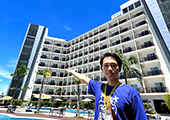 리얼 학교 방문기
 주말에 내가 쓸 비용은?
 최고가성비 이벤트 즐기기
 현지에서도 필자닷컴!
 현지에서 가능한









 필자 특급 혜택! 컨시어지 서비스







-
순위제목조회수
-
 MINUTE TO WIN IT
 46,824
 -
 Apple Eating Contest Game 34,303
 -
 SINGING BEE 23,781
 -
 DEAL OR NO DEAL23,454
 -
 rodeo masbatenio19,457
 -
 Luksong Lubid14,354
 -
 EGG AND SPOON RACE12,354
 -
 BUNONG BRASO ( ARM WRESTLING)12,238
 -
 HULA HOOP12,230
 -
 Tumbang Preso12,208


- 이름 : tutors
- 작성일 : 2012-08-24
- 조회수 : 4719
- 추천수 : 1
T I N I K L I N G

The tinikling dance is one of the most popular and well-known of traditional Philippine dances. The tinikling is a pre-Spanish dance from the Philippines that involves two people beating, tapping, and sliding bamboo poles on the ground and against each other in coordination with one or more dancers who step over and in between the poles in a dance. The name is a reference to birds locally known as tikling, which can be any of a number of rail species; the term tinikling literally means "tikling-like."

Tinikling involves five steps; during the first four steps, the dancers dance opposite each other, and during the last step, they start from the same side of the poles. The bamboo is also used as a percussive instrument as it is banged against the ground (or a piece of wood to make it easier to hold) and each other in a pattern. The bamboo has to be closed hard enough to make a sound, and the dancers must be quick enough to not get their foot (or feet) caught. As the dance continues, the banging of the bamboo becomes faster and harder, the sound of the clashing bamboo and the quickness of feet demonstrated by the dancers thrilling and awing the crowd. In the United States, this dance had been altered into a four-beat rhythm to adjust to popular music. In some cases, it has been used in conjunction with traditional Filipino martial arts to demonstrate fleetness of foot and flow of movement.

Dance Progression
As the dance continues, the tempo and the volume of the bamboo-beating increases and the dancers must be sure not to get their feet caught by the sticks.
Changes and Uses of the Dance
Filipino Americans have changed the time of the dance to 4/4 (four beats per measure). The dance also has been used in Filipino martial arts displays

ORIGINS
The tinikling originated in Leyte in the Visayan islands of the Philippines. One legend has it that centuries ago, when Spain conquered the Philippines, peasants who did not work hard enough were punished by having to stand between two poles on the ground that were then beaten against their feet. Jumping to escape the beating evolved into the dance.





- ·Dr.quack quack game (THE HUMAN
- ·SLIPPER GAME
- ·Bati-Cobra
- ·MONOPOLY GAME
- ·coconut shell race/sangkayaw
- ·Jack\'n\'Poy
- ·TEN-TWENTY
- ·tomato dance
- ·Serereng
- ·\"Araw - Lilim\" (Day and Nigh
- ·MAALIS-ALIS/ kaya, kulob (palm
- ·Bottle and Straw Game
- ·Habulan ng Baboy (chase and ca
- ·PING TAC TOE
- ·PITIK - BULAG









- ·Salapan Festival
- ·Empanada Festival (Batac City)
- ·PADUL-ONG FESTIVAL
- ·Kaumahan Festival in Barili
- ·KAGASANGAN FESTIVAL
- ·Lalin Festival in Asturias
- ·Tinabuay Festival
- ·Gayon Bicol Festival
- ·PINYASAN FESTIVAL in CAMARINES
- ·MAGAYON FESTIVAL
- ·BANAUAN FESTIVAL (BARANGAY.GUA
- ·The Tuna Festival in Gensan
- ·PINTOS FESTIVAL BOGO CITY, CEB
- ·Panaad sa Negros
- ·Pasalamat Festival






- ·CEBU WESTOWN LAGOON
- ·GREEN LAGOON, COMPOSTELA
- ·CALLAO CAVE
- ·MOUNT PINATUBO IN PHILIPPINES
- ·BATAN ISLAND in Batanes.
- ·CALAGUAS ISLAND, CAMARINES NOR
- ·AGHO ISLAND
- ·CARAMOAN ISLAND IN CAMARINES S
- ·SAMBAWAN ISLAND
- ·PLACES TO VISIT IN LANAO DEL N
- ·PLACES TO VISIT IN ZAMBOANGA C
- ·Places to visit in Rizal Provi
- ·HISTORIC TOWN OF VIGAN CITY, I
- ·CAMBUGAHAY FALLS, SIQUIJOR ISL
- ·TINUY-AN FALLS in BISLIG CITY,









-
서울센터 :서울 강남구 테헤란로27길 8, 10층 (역삼동, 엠타워)02-3482-0542
-
청주센터 :충청북도 청주시 흥덕구 서현동로 4, 3층(가경동)043-221-0543
-
부산센터 :부산광역시 부산진구 중앙대로 721-1, 5층(부전동)051-808-0515
-
창원센터 :경남 창원시 성산구 단정로 9, 12층 (상남동, 토토스빌딩)055-282-9345


-
사이트 접속자 통계
-
오늘203어제445
-
한달33,515누적12,533,346
-
일일최고94,672회원수20,299