




 필자닷컴 야간상담 오픈
 13년연속 소비자만족 1위
 내게 맞는 어학원 찾기
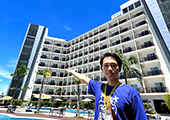 리얼 학교 방문기
 주말에 내가 쓸 비용은?
 최고가성비 이벤트 즐기기
 현지에서도 필자닷컴!
 현지에서 가능한









 필자 특급 혜택! 컨시어지 서비스







-
순위제목조회수
-
 MINUTE TO WIN IT
 46,824
 -
 Apple Eating Contest Game 34,304
 -
 SINGING BEE 23,781
 -
 DEAL OR NO DEAL23,454
 -
 rodeo masbatenio19,457
 -
 Luksong Lubid14,354
 -
 EGG AND SPOON RACE12,355
 -
 BUNONG BRASO ( ARM WRESTLING)12,238
 -
 HULA HOOP12,230
 -
 Tumbang Preso12,208


- 이름 : tutors
- 작성일 : 2012-09-19
- 조회수 : 3849
- 추천수 : 0

Players employ many different offensive strategies with different goals. Most basic strategies are an attempt to create open lanes on the field for the exchange of the disc between the thrower and the receiver. Organized teams assign positions to the players based on their specific strengths. Designated throwers are called handlers and designated receivers are called cutters. The amount of autonomy or overlap between these positions depends on the make-up of the team.

One of the most basic defensive principles is the force. The marker effectively blocks the handler's access to half of the field, by aggressively blocking only one side of the handler and leaving the other side open. The unguarded side is called the force side because the thrower is generally forced to throw to that side of the field.

The guarded side is called the break-force side, or simply break side, because the thrower would have to "break" the force to throw to that side. This is done because, assuming evenly matched players, the handler is considered to have an advantage over the marker. It is considered to be relatively easy for the handler to fake out or outmaneuver a marker who is trying to block the whole field, and thus be able to throw the disc. Alternatively, it is generally possible to effectively block half of the field.

The simplest defensive strategy is the one-on-one defense (also known as "man-to-man", "man" or simply "person"), where each defender guards a specific offensive player, called their "mark". The one-on-one defense emphasizes speed, stamina, and individual positioning and reading of the field. Often players will mark the same person throughout the game, giving them an opportunity to pick up on their opponent's strengths and weaknesses as they play. One-on-one defense can also play a part role in other more complex zone defense strategies.

Highly competitive play is encouraged, but never at the expense of the bond of mutual respect between players, adherence to the agreed upon rules of the game, or the basic joy of play. Protection of these vital elements serves to eliminate adverse conduct from the Ultimate field. Such actions as taunting of opposing players, dangerous aggression, intentional fouling, or other 'win-at-all-costs' behavior are contrary to the spirit of the game and must be avoided by all players.





- ·Dr.quack quack game (THE HUMAN
- ·SLIPPER GAME
- ·Bati-Cobra
- ·MONOPOLY GAME
- ·coconut shell race/sangkayaw
- ·Jack\'n\'Poy
- ·TEN-TWENTY
- ·tomato dance
- ·Serereng
- ·\"Araw - Lilim\" (Day and Nigh
- ·MAALIS-ALIS/ kaya, kulob (palm
- ·Bottle and Straw Game
- ·Habulan ng Baboy (chase and ca
- ·PING TAC TOE
- ·PITIK - BULAG








- ·Salapan Festival
- ·Empanada Festival (Batac City)
- ·PADUL-ONG FESTIVAL
- ·Kaumahan Festival in Barili
- ·KAGASANGAN FESTIVAL
- ·Lalin Festival in Asturias
- ·Tinabuay Festival
- ·Gayon Bicol Festival
- ·PINYASAN FESTIVAL in CAMARINES
- ·MAGAYON FESTIVAL
- ·BANAUAN FESTIVAL (BARANGAY.GUA
- ·The Tuna Festival in Gensan
- ·PINTOS FESTIVAL BOGO CITY, CEB
- ·Panaad sa Negros
- ·Pasalamat Festival






- ·CEBU WESTOWN LAGOON
- ·GREEN LAGOON, COMPOSTELA
- ·CALLAO CAVE
- ·MOUNT PINATUBO IN PHILIPPINES
- ·BATAN ISLAND in Batanes.
- ·CALAGUAS ISLAND, CAMARINES NOR
- ·AGHO ISLAND
- ·CARAMOAN ISLAND IN CAMARINES S
- ·SAMBAWAN ISLAND
- ·PLACES TO VISIT IN LANAO DEL N
- ·PLACES TO VISIT IN ZAMBOANGA C
- ·Places to visit in Rizal Provi
- ·HISTORIC TOWN OF VIGAN CITY, I
- ·CAMBUGAHAY FALLS, SIQUIJOR ISL
- ·TINUY-AN FALLS in BISLIG CITY,









-
서울센터 :서울 강남구 테헤란로27길 8, 10층 (역삼동, 엠타워)02-3482-0542
-
청주센터 :충청북도 청주시 흥덕구 서현동로 4, 3층(가경동)043-221-0543
-
부산센터 :부산광역시 부산진구 중앙대로 721-1, 5층(부전동)051-808-0515
-
창원센터 :경남 창원시 성산구 단정로 9, 12층 (상남동, 토토스빌딩)055-282-9345


-
사이트 접속자 통계
-
오늘217어제445
-
한달33,515누적12,533,360
-
일일최고94,672회원수20,299